The Origin of the Middle Finger: 2,400 Years of Flipping the Bird
The middle finger might be the most efficient piece of communication people have ever come up with. It needs no translation, no words and no Wi-Fi. It’s also very old, far older than the story you’ve probably heard about English archers.
Ancient Greece: the first recorded bird
The earliest written reference we have comes from Athens around 423 BC, in Aristophanes’ comedy The Clouds. A farmer named Strepsiades is getting a lecture from Socrates about poetic rhythm and the “dactyl,” a word that comes from the Greek for finger. Strepsiades shows he knows exactly what a finger is for and sticks up his middle one. The audience got the joke. That tells you the gesture was already common long before anyone wrote it down.
A century later the philosopher Diogenes the Cynic, a man who lived in a large jar and insulted almost everyone, is said to have pointed out the famous orator Demosthenes to visitors using his middle finger. In other words, he flipped off the most respected speaker in Athens to make a point.
Rome: the “shameless finger”
The Romans had a name for it: digitus impudicus, the shameless or indecent finger. It shows up in Roman poetry as an insult, and its meaning was openly phallic. That’s the real root of the gesture. The finger stands in for a body part, and the message is about as subtle as you’d expect.
Roman writers also tell stories about the emperor Caligula making the gesture when he held his hand out for people to kiss. It was a petty move from a famously petty man.
The Agincourt story is a myth
You’ve probably heard this one. At the Battle of Agincourt in 1415, the French supposedly threatened to cut off the drawing fingers of captured English archers. After the English won, they waved their fingers at the French to show they still had them. The story even claims “pluck yew” turned into another two-word phrase.
It’s a great story, and none of it is true. It spread as an internet joke in the 1990s. The gesture is roughly 1,800 years older than the battle, and the “pluck yew” etymology doesn’t hold up for a second. (The English two-fingered “V” insult has its own murky history, but it isn’t the middle finger either.)
The Done List, weekly
One email a week. That's the whole commitment.
The funniest stuff we wrote, new designs, and zero small talk. Unsubscribe whenever. No hard feelings, we get it.
America adopts it
The middle finger probably arrived in the US with Italian and other immigrants in the 19th century. The first known photograph of an American giving the finger is from 1886: Charles “Old Hoss” Radbourn, a pitcher for the Boston Beaneaters, flipping off the camera in a team photo with the New York Giants. Baseball got there first, as usual.
From there it went everywhere: into rock-and-roll photography (see the story of Johnny Cash flipping the bird at San Quentin), into politics, into courtrooms (it’s legal to flip off a cop in the US, for the record) and in 2014 into Unicode as 🖕, officially “reversed hand with middle finger extended.” It reached iPhones the following year.
Why it’s lasted 2,400 years
Most insults go out of date. The middle finger hasn’t, because it does something words can’t: it ends the conversation. There’s no comeback to it. It’s a complete sentence that everyone understands, from a theater in Athens to the parking lot at Costco.
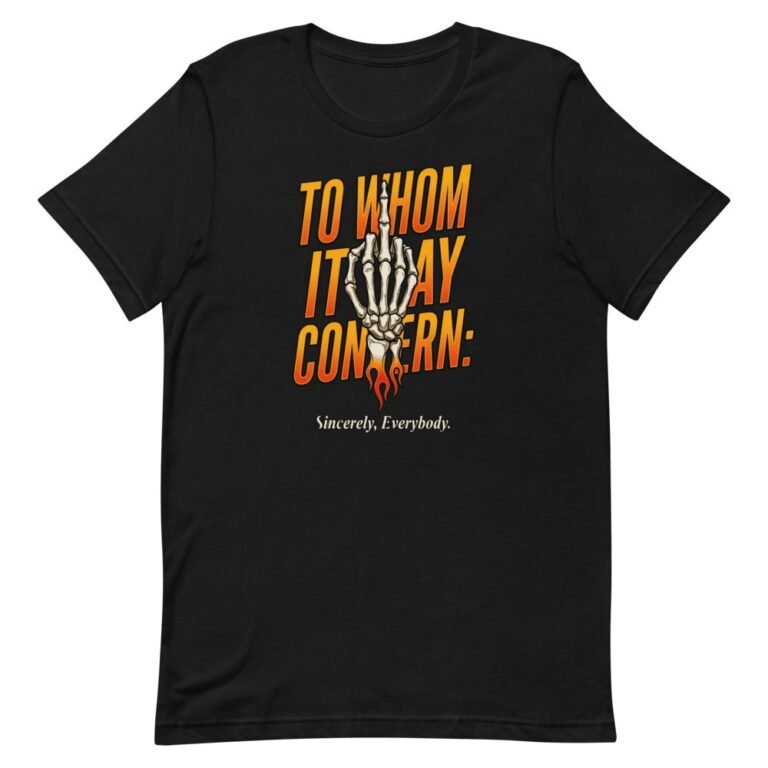
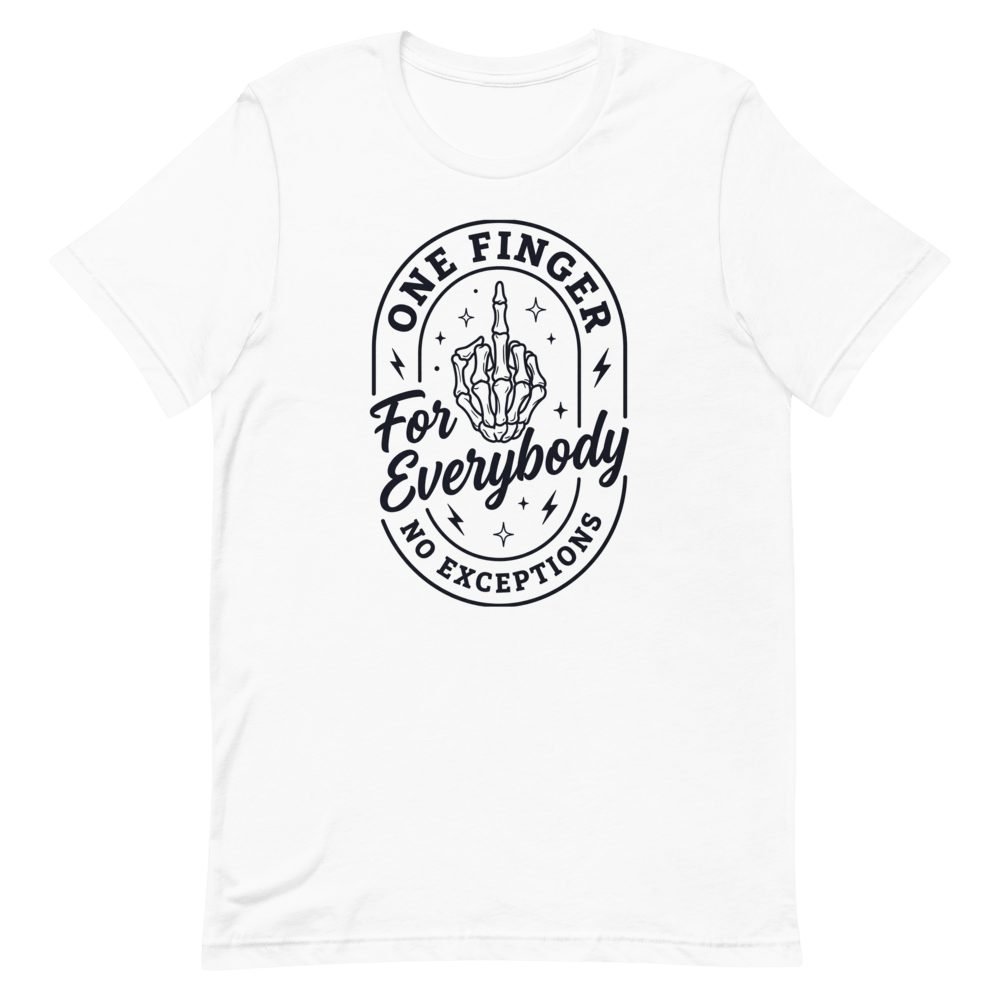
If you want to carry that tradition with you, the middle finger shirt collection has versions for every mood. There’s a skeleton middle finger shirt for people whose patience died years ago, a letter to whom it may concern, and rock-and-roll legends doing what they did best.
Before you go
Get tomorrow's rant without leaving the house
One short email a week with the best complaints and whatever new merch said it for us. No spam. We hate that too.