

Gag gifts for white elephant, engineered to get stolen
Somewhere right now, a person is standing in a fluorescent-lit break room holding a numbered slip of paper, praying to a god they don’t believe in that they don’t get stuck with the gift bag of scented drawer liners. This is white elephant. It is the office holiday party boiled down to its purest form: forced proximity, low stakes, and one shiny thing everyone secretly wants to steal. And the whole event lives or dies on one decision — what you wrapped and threw into the pile.
So let’s fix that. The best gag gifts for white elephant aren’t just “funny stuff off a list.” They’re engineered — reverse-designed from how the game actually works, so yours becomes the one that gets stolen three times before the timer runs out. We’re not here to hand you another random ranking of novelty junk. We’re here to help you win the room and then go back to quietly not caring, which is the dream.
Nobody’s getting roasted here except the situation itself, and, as always, us. Let’s get into it.
White elephant, explained for people who dread it

If you already know the rules, skip ahead. If you’ve been nodding along in meetings pretending you understand this game for four years, welcome, you’re safe here, no one has to know.
Everybody brings one wrapped gift, usually under a price cap. Everyone draws a number. Person one opens something. Person two can either open a fresh gift or steal person one’s. On down the line. A gift can usually only be stolen a set number of times before it’s “locked,” and then it belongs to whoever’s cold, dead hands are clutching it when the music stops.
Here’s the part every gift guide on the internet quietly ignores: the steal is the entire game. A gift nobody steals is just a thing you handed a stranger. A gift that gets stolen twice is a story people tell in the parking lot afterward. You are not trying to give a nice present. You are trying to manufacture a small, contained riot over a $23 object. That’s the assignment. Everything below is built around it.
The three rules every gag gift for white elephant must clear
Before a single “haha, cute” idea goes in your cart, it has to survive three filters. Miss any one of them and your gift becomes the sad locked-up leftover nobody fought for. Clear all three and you’ve built a steal magnet.
Rule 1: It has to get stolen
“Would I, a grown adult, be a little bit thrilled to walk out with this?” If the honest answer is no, it’s dead on arrival. Stealable means instantly graspable — someone across the table gets it in one glance, laughs, and wants it before they’ve even thought about why. No explanation required. If you have to stand up and explain your gift, you’ve already lost. The room has moved on. So have we all.
Rule 2: It has to hit the cap
Most white elephants run a strict price limit — usually somewhere around $20 to $30. This is not a suggestion, it is the physics of the game. Blow past it and you look like you’re trying too hard; come in at four dollars and it reads as “I remembered this in the parking lot.” The sweet spot is a gift that looks like it cost more than it did. Punch above the cap in presence, not in receipt total.
Rule 3: It has to work for a stranger
You are, functionally, buying a present for a person you have never met and will never see again. That kills anything requiring context. No inside jokes. No “you had to be there.” No gift that only lands if the recipient happens to share your extremely specific opinion about anything. The comedy has to be universal — the kind of funny that works on the accountant, the new hire, and the regional manager equally, because it’s about the shared human experience of being tired, not about any one person. That’s not just the safe play. It’s the funnier play.
Those three rules do a lot of quiet work. They filter out the mean stuff, the niche stuff, and the boring stuff automatically — which, conveniently, is also everything that gets an office gift exchange awkward. If you only remember one thing from this whole guide, remember the filter. Now, the good part: what actually clears it.
The universally funny tier: no inside jokes, no one left out

This is the safest, highest-hit-rate category, and it’s where you should shop first. Universally funny means the joke is a feeling everyone in that room has had, printed on an object. Nobody’s identity is the punchline; the punchline is being a person who has to attend things. That’s the whole brand of the season, honestly.
- The aggressively honest mug. A mug that says the quiet part — something in the register of “I put the ‘no’ in ‘notification'” or “people person (from a safe distance).” Everyone at that table has felt exactly this at 8:47 on a Monday. It’s deadpan, it’s universal, and it will live on someone’s desk for years quietly saying what they can’t say in the standup meeting.
- The “for people who are done” tee. A shirt that reads like a sigh. Not angry, not edgy — just tired in a way the entire room recognizes. The best ones are the ones people immediately want to wear to the next obligation.
- The desk sign that says what HR won’t let you say. Small, framed, deadpan. Reads as a joke, functions as a boundary. Peak white elephant energy: it’s funny to everyone and secretly true for the person who ends up with it.
- The comically specific “award.” A little trophy for something dumb and shared — “survived another all-hands,” that genre. Absurd, warm, zero targets. People steal trophies. It’s a documented fact of the game.
The thread running through all of these: the joke points at the situation, never at a person. That’s not us being cautious. It’s that “we’re all exhausted here, me most of all” is genuinely the funniest and most stealable joke in the room. Cruelty makes a party quiet. Recognition makes it loud. You want loud.
The display-it-on-the-desk tier: gifts that survive past the party
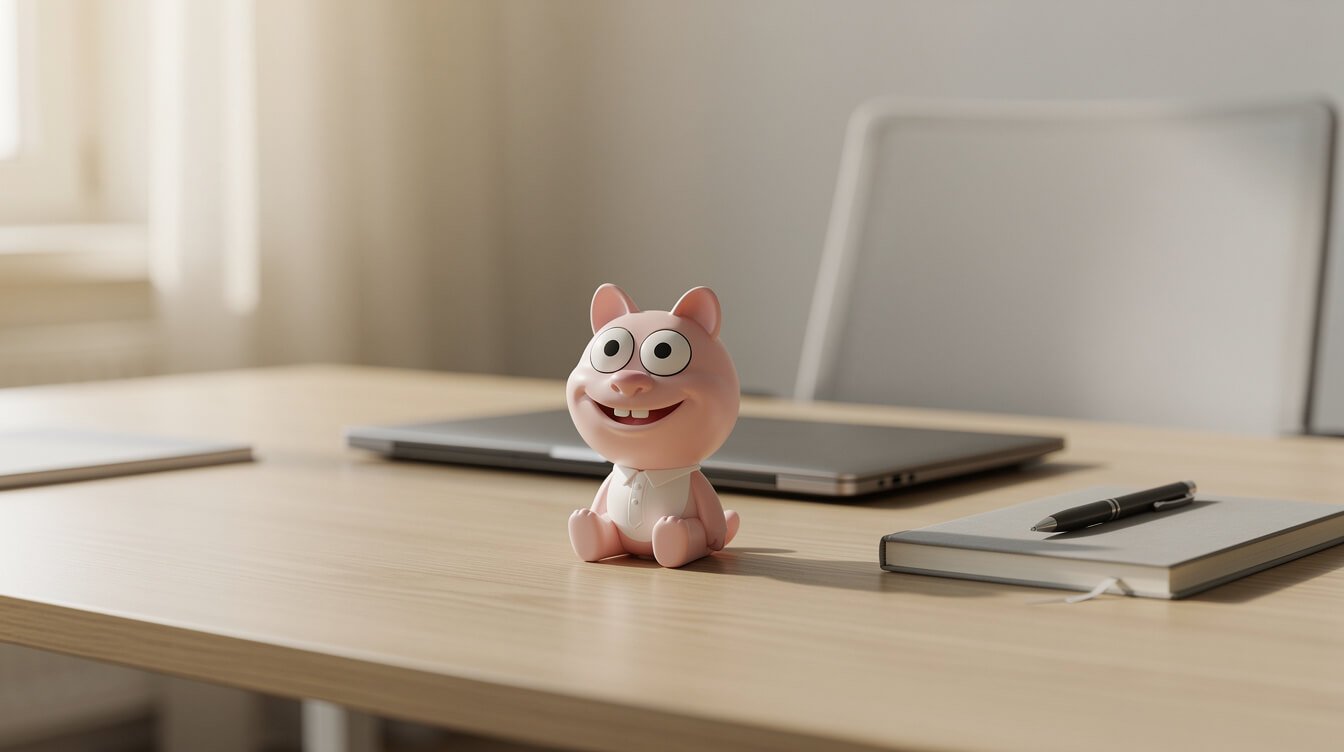
There’s a whole class of white elephant gift that dies the second the party ends — the single-use bit, the thing that gets laughed at once and then lives in a drawer until it becomes landfill in March. Skip those. The gifts that get stolen hardest are the ones people can actually keep and use, because now they’re not just winning a joke, they’re winning something they’ll see every day.
Think objects with a second life. A genuinely nice enamel mug that happens to be funny. A desk plant pot shaped like something ridiculous. A sturdy tote with a line on it people will actually read on the train. The move is a real object doing a funny job — because “funny and I get to keep it” beats “funny for eight seconds” every single time. When someone’s deciding whether to steal, the little voice that says “wait, I’d actually use that” is what closes the deal.
This tier is also where you dodge the biggest trap in the whole game: the gift that’s technically hilarious and completely useless. A one-note prank gift is a great story and a terrible object. Give people a thing they’ll be quietly glad to own once the confetti’s swept up. That’s the difference between “that was funny” and “I’m taking this home and you can’t stop me.”
Under $25 that punches way above its price
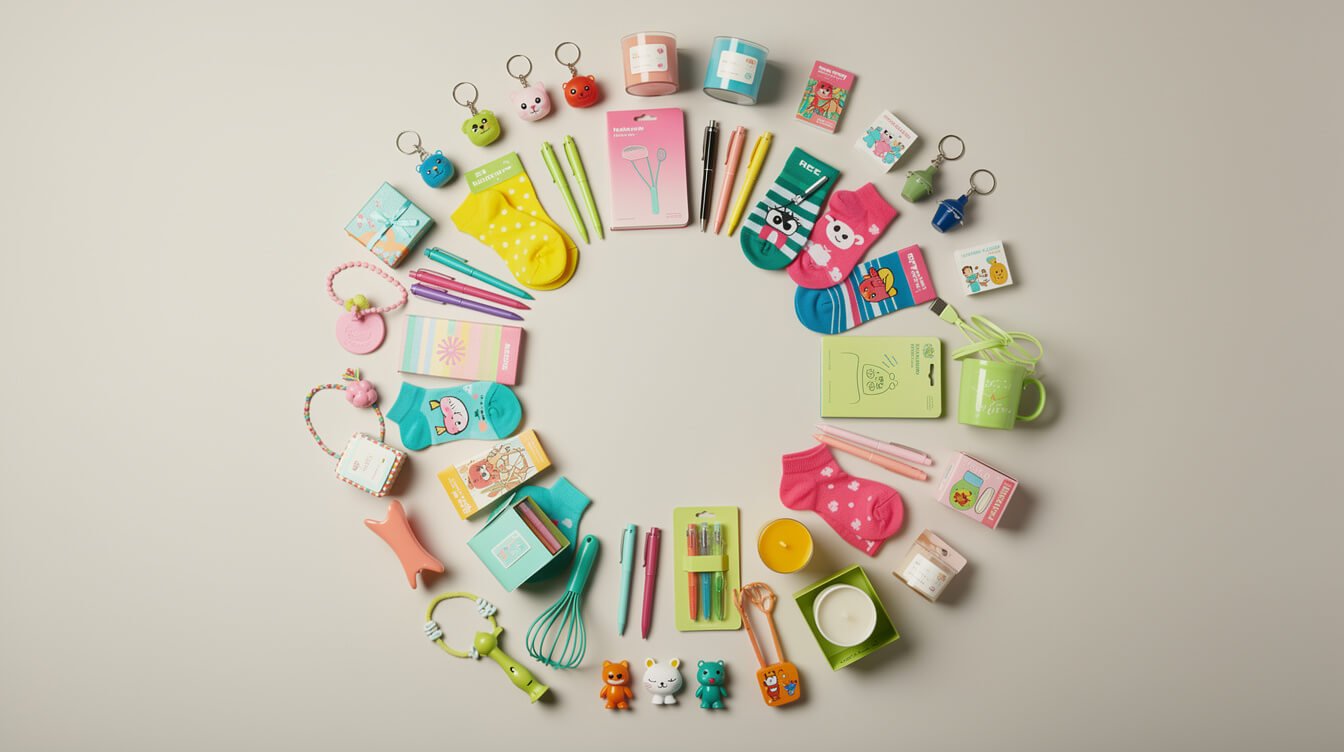
Most caps land right around here, so this is the real battlefield. The goal isn’t to spend the most — it’s to look like you cracked the code while everyone else panic-bought a candle. A few principles that reliably beat the cap on vibes:
- One strong object beats a bundle of small ones. A pile of little stuff reads as “gift basket assembled at a gas station.” One confident, funny, keepable thing reads as “this person understood the assignment.” Single hero item, every time.
- Presentation is half the steal. The wrap does real work. A gift that looks like a prize gets grabbed before anyone knows what’s inside. Mystery plus good wrapping is a genuine strategy; people steal the intriguing box on principle.
- Funny + useful is the max-value quadrant. Cheap-and-funny-and-usable is the trifecta. That’s the mug, the tee, the desk thing — small money, big presence, long life. It’s not a coincidence that’s most of this list.
If you want the lazy-genius version: a great funny mug or a deadpan tee under the cap does all three jobs at once. It’s stealable on sight, it hits the price, it works for a total stranger, and it outlives the party. That’s not us conveniently pointing at the merch table — it’s just genuinely what the game rewards. Speaking of which, if you’d rather skip the scavenger hunt entirely, the whole store is basically a white elephant cheat code — deadpan things people actually want to steal.
What tanks in white elephant (and why)
Just as useful as knowing what wins is knowing what dies in the pile. Every failed white elephant gift fails in one of three predictable ways. Avoid these and you’ve cleared 90% of the field, because most people walk right into them.
- Too niche. The gift that requires backstory. Anything built on an inside joke, a specific fandom, or “well, at MY old job we used to—” No. Strangers can’t steal a punchline they don’t have. Universal or bust.
- Too mean. The gift that’s a little bit cruel and thinks that’s the joke. It’s not. Punching down makes a whole table go quiet and someone feel singled out, and now you’re the reason the party got weird. The brand of the season is everyone’s equally exhausted, not “let’s gang up on Kevin.” Roast the situation, never the person. It’s warmer and it lands harder.
- Too boring. The safe candle. The generic chocolate. The thing that’s fine. “Fine” never gets stolen — it gets politely locked in by whoever opened it while everyone eyes the mug across the table. Boring is the only truly unforgivable white elephant sin, because the entire point was to start a small riot and you brought a nap.
Notice all three failure modes are things the three rules already screen out. That’s the point of the filter. If you’re ever unsure about a gift, run it back through: gets stolen, hits the cap, works for a stranger. If it stumbles on any of them, put it down and back away.
The steal-magnet shortlist: gag gifts for white elephant, ranked by chaos

Here’s the whole guide compressed into a grab-and-go list, sorted by how much cheerful mayhem each one tends to cause at the table. All of them clear the three rules. All of them are about the shared experience of being a tired person in a room full of other tired people — which is the only inside joke everyone’s actually in on.
- The deadpan mug that says what everyone’s thinking. The reigning champion of the genre. Cheap, keepable, instantly readable across a table, and true for literally anyone who ends up with it. Gets stolen on sight. If you buy one thing, buy this.
- The “done with everyone’s BS” tee. A wearable sigh. High steal rate because people can already picture wearing it to the next thing they didn’t want to attend.
- The absurd little desk trophy. An award for surviving something everyone survived. Warm, dumb, universal. Trophies get stolen — it’s practically a rule.
- The framed desk sign that’s a boundary in disguise. Funny out loud, secretly load-bearing. Whoever wins it is putting it on their desk Monday.
- The nice-but-funny keepable object. The tote, the enamel pin, the ridiculous-but-usable thing. The “wait, I’d actually use that” steal.
- The mystery box wrapped like a prize. Lowest-effort chaos available. Wrap something solid to look expensive and let the room’s greed do the rest.
Pick from the top of that list if you want maximum table chaos, from the middle if you want a safe, guaranteed hit. There’s no wrong answer up there — they all clear the filter, which was the whole job.
Frequently asked white elephant questions
The stuff people actually search at 11pm the night before the party, answered fast.
What’s a good price limit for a white elephant gift?
Most groups land between $20 and $25, sometimes up to $30. Ask the organizer, then treat the cap as a hard ceiling — the goal is a gift that looks like it cost more than it did, not one that actually did. Overspending doesn’t win the game; it just makes the next person feel weird about their candle.
What’s the difference between white elephant and Secret Santa?
Secret Santa: you’re assigned one specific person and buy for them, usually anonymously. White elephant: everyone contributes to a shared pile and the fun is in the stealing. That’s why gag gifts for white elephant skew funnier and more universal — you’re buying for the whole room, not one person, so the joke has to land on everyone.
Are gag gifts okay for an office party, or is that risky?
Totally fine — as long as the joke is about the shared situation, not about a person. A mug that says “people person, from a safe distance” is funny to everyone and targets no one. Anything that could single out a coworker, or read as mean rather than tired, is the one thing that actually gets a party awkward. Keep it universal and you keep it safe. Funny and kind aren’t opposites; the warm joke is usually the funnier one anyway.
What if I have literally no time?
Grab a deadpan mug or a funny tee, wrap it so it looks like a prize, and walk in. It clears all three rules by default. The whole point of this guide was to make the last-minute version the winning version.
Go win the pile
White elephant is the rare office obligation that’s actually kind of great, if you show up with the right thing. You don’t need to be clever, or spend more, or have an inside joke with a stranger. You need one funny, keepable, universally recognizable object that makes the whole tired room laugh at the same time and immediately want to steal it. That’s the game. That’s the whole game.
And underneath the strategy talk, that’s sort of the nice part, isn’t it — the reason a good white elephant gift works is that everyone in that room is secretly a little worn out by the same stuff, and for two minutes a dumb mug lets you all admit it together. We’re all ridiculous. Me most of all. It looks great on a mug.
If you want the shortcut, we make the deadpan, universally funny, extremely stealable version of all of this — shop the funny stuff, browse the rest of our gift guides, or dig through the funny gifts for the person who’s done with everyone’s BS. Now go win the pile. Quietly. From a safe distance.